


Recently, the announcement of the award decisions for the 21st China Patent Award was made public. As a patent attorney with over 20 years of experience in the IP field, who has always maintained reverence for inventors, respect for the profession, and curiosity about advanced technology, I naturally wanted to carefully examine the list of gold and silver award winners honored with this distinction. While browsing the list of this year's China Patent Gold Award winners, a case I handled 9 years ago suddenly came into view: China University of Mining and Technology (Beijing)'s patent "Constant-Resistance Large-Deformation Cable and Its Constant-Resistance Device" ZL201110157137.4, which won the China Patent Gold Award. This is an invention from the team of Academician He Manchao of the Chinese Academy of Sciences, effectively solving the scientific challenge of controlling major geological hazards such as rockbursts and landslides. Today, looking back at the words of the patent document drafted by the team I led at that time, the sense of responsibility on my shoulders instantly multiplied. I believe other patent attorneys involved in winning cases must share similar feelings to some extent.
The China Patent Award is not only the highest national-level patent award but is also recognized by the United Nations World Intellectual Property Organization (WIPO) and holds extensive international influence. Its evaluation criteria are extremely high, and the selection process is stringent. It focuses not only on the quality of the patent text, emphasizing the height of technological innovation, but also on the embodiment of its market value, considering its application status, protection status, and management during market transformation. This honor is not only affirmation from the China National Intellectual Property Administration for R&D and intellectual property work but also recognition for the relevant inventors and the quality of products applying the patented technology. Simultaneously, I personally believe that although this honor is not awarded to patent attorneys, it is precisely the technological innovation of corporate R&D personnel and the patent quality ensured by patent attorneys that forge these substantial patent medals. Behind each award-winning patent lies the patent attorney's tireless efforts to secure the filing date and meticulously optimize the scope of protection... Here, I cannot help but give a big "thumbs up" to Li & N IP and fellow patent attorneys who handle each case with diligence and meticulousness!
Returning to the 21st China Patent Award, the journey from last year's selection announcement to the final publication and award ceremony was somewhat long. However, this did not prevent numerous media outlets, as well as winning provinces, cities, enterprises, and institutions, from announcing their victories within days after the decision was published on July 15, 2020. Indeed, public patent awareness today is incomparable to years past. This substantial award not only signifies the advancement of the technology itself but also serves as a crucial component for enterprise sustainable development and brand image promotion.
I also searched with great interest for reports by public media or enterprises on some award-winning patents on online platforms. Now, let's follow me to explore the patent stories of these enterprises, keep pace with their development, and discuss several noteworthy issues, aiming to establish, from a consciousness level, a better direction for providing high-quality services to clients.
(I) Multiple Traditional Chinese Medicine Patents Among the Honored, But Overseas Patent Layout Still Urgently Needs Strengthening
Some professionals have conducted multi-faceted patent analyses of the patents from this China Patent Award. From a technological field perspective, what stands out in this patent award is that multiple patents involving Traditional Chinese Medicine (TCM) are among the honored:
1. 2 China Patent Gold Awards:
* Jiangsu Kanion Pharmaceutical Co., Ltd. ZL02128962.X "Preparation Containing Ginkgolide and Its Preparation Process"
* Dalian Deze Pharmaceutical Co., Ltd. ZL200910162658.1 "A Method for Preparing the Anticancer Drug Elemene from Curcuma Wenyujin"
2. 22 China Patent Excellence Awards:
* China National Pharmaceutical Group Corp. Tongjitang ZL201310055079.3 "An Extraction Method for Xianling Gubao, Its Isolated Extract, and Preparation"
* Huiren Pharmaceutical ZL03109434.1 "A Kidney-Tonifying Traditional Chinese Medicine", etc.
A total of 24 TCM patents received awards. This reflects, on one hand, the preliminary success of the national TCM development strategy, placing Chinese TCM innovation on equal footing with Western medicine innovation. On the other hand, it marks a significant improvement in the patent protection awareness of TCM enterprises and the notable effectiveness of a series of measures promoting patent protection. However, incomplete retrieval and analysis reveal that most of these gold or excellence award-winning patents have not undergone overseas patent layout, and their early filing dates have already forfeited opportunities for foreign patent applications.
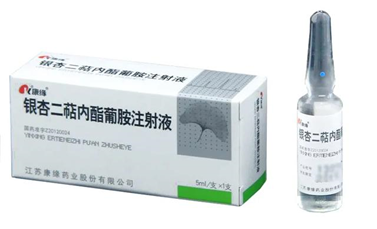
Taking Jiangsu Kanion Pharmaceutical as an example, the gold award-winning Chinese patent ZL02128962.X, as a foundational patent for ginkgo diterpene lactone-related technology, was not patented overseas. According to reports, the patented product Ginkgo Diterpene Lactone Meglumine Injection obtained a new drug certificate in 2012. It is the world's first innovative drug developed and marketed targeting PAFR, possessing dual effects of anti-platelet aggregation and neuroprotection. It is widely used in clinical treatment for ischemic stroke patients, with sales exceeding 1 billion yuan in 2019. Based on the "Preparation Containing Ginkgolide and Its Preparation Process" patent technology, Kanion Pharmaceutical stated that R&D achievements, including optimization of active ingredient ratios, detection methods, new dosage forms, and new indications, have led to the filing of 56 invention patent applications, with over 30 currently granted. However, these patents are mostly limited to Chinese domestic patents, only providing exclusivity in the Chinese market, essentially handing over the technology and market to foreign competitors. A simple search in the INCOPat database using "ginkgo" and "Kanion Pharmaceutical" shows that currently, only for a ginkgo diterpene lactone composition of two components, PCT international patent applications WO/CN2018/115167 and WO/CN2018/115166 were filed based on corresponding Chinese patent applications CN201711475539.2 and CN201711475578.2 as priorities ( *As they are about to or are in the process of entering relevant countries, the specific national entries for these applications could not be searched). The effectiveness of such a patent layout is still quite minimal.
According to incomplete statistical analysis by professionals on the status of overseas TCM patents, over 1,000 TCM patents have been preemptively registered by foreigners. Over 80% of Chinese patent medicine prescriptions are held by Japan, South Korea, and Germany. For instance, the U.S. filed a patent for "Ginseng Royal Jelly," South Korea for "Niuhuang Qingxin Wan," Japan for "Liushen Wan," and Germany for "Artemisinin"... These are all pains for the Chinese people.
Therefore, I offer some earnest suggestions specifically to TCM pharmaceutical enterprises: Fully utilize various patent layout strategies. For innovative TCM technologies, patent applications should be filed in multiple countries covering various aspects such as active ingredients of TCM, TCM compound compositions, preparation methods of TCM formulations, extraction methods of effective substances from TCM, TCM quality control methods, TCM uses, and related equipment, to provide comprehensive, long-cycle effective patent protection for innovative TCM. Furthermore, I hope that with national policy tilting towards high-quality patents, enterprises can genuinely improve their global patent layout, incorporating this as one of the key evaluation indicators for the China Patent Award. May we see outstanding examples of global patent layout among future China Patent Award winners.
(II) Aesthetic Design Patents Led by Technological Innovation Play a Pivotal Role
For innovative enterprises, the role of design patents is becoming increasingly significant. Especially aesthetic designs with a sense of beauty led by technological innovation are like adding wings to a tiger for terminal consumer goods enterprises seeking to capture the market. This is also one of the fundamental reasons why the China Patent Award separately establishes design award categories. This is evident across past sessions, including the current one.
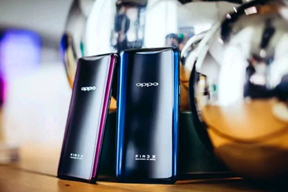
For example, in this session's China Patent Award, OPPO received one Gold Award for Design and one Silver Award for Patent, namely the OPPO Find X design patent ZL201830465140.5 and the patent for intelligent camera mode switching technology ZL201611079604.5. Clearly, the elegant design of the curved panoramic screen on the OPPO Find X smartphone, with its high screen-to-body ratio of 93.8% featuring a dual-curved flexible screen, relies to some extent on structural changes to components like the camera module, other display elements, and circuit structures. Simultaneously, patent data analysis reveals that OPPO, as a pioneer and popularizer in 5G development, has now deployed over 3,000 global patent applications for 5G communication standard patents across multiple countries and regions. In other words, OPPO's design gold award is achievable only under the leadership of OPPO's technological innovation.
Another example: PowerVision's product, the underwater drone PowerRay "Little Manta Ray" (ZL201730002884.9 Unmanned Vessel), along with DJI's gimbal camera, BYD's automobiles, etc., is among the 10 China Design Gold Award winners. PowerVision itself believes: While the functionality of tech products is undoubtedly important, aesthetics should not be overlooked either. Products combining humanity and fashion should be one of the major directions for future tech products. Apart from recognition from tech awards like CES, this product has also garnered numerous design awards, such as the Red Star Design Award and the Red Dot Design Award, all favoring this product. Judging from PowerRay "Little Manta Ray's" award history, it indeed represents a high-value design achieved under the leadership of PowerVision's multiple technological innovations.

Additionally, Ubtech Robotics' robot patent ZL201830039956.1 won the China Design Silver Award. Ubtech Robotics had also previously won the 20th China Patent Gold Award and a China Design Silver Award.
Judging from the awards won and market capture by the exterior design of tech products in recent years, these unique aesthetic designs led by technological innovation can effectively capture the attention of consumer groups and serve as an important strategic means to quickly occupy the consumer market. As part of the patent strategy aligned with corporate business strategy, strengthening the layout of design patents is essential. We must change the mindset and practices that focus only on technological substance while neglecting the exterior design, or blindly pursue invention patents while overlooking design patents.
Furthermore, considering one of the hot topics in the fourth amendment to China's Patent Law, which adds partial design protection and extends the protection term for design patents, we can predictively assert that future aesthetics in technology-led exterior design and their corresponding design patents will become important protective talismans for tech products. Relevant enterprises should incorporate design patents into their patent strategy elements.
(III) Assisting in Building Standard Essential Patents to Maximize Patent Value
To maximize corporate benefits and the value of individual patents, industry-leading enterprises strive to make their granted patents become Standard Essential Patents (SEPs) during the process of participating in industry standard setting. Therefore, SEPs often become targets—objects of invalidation challenges. For those SEPs that withstand invalidation attacks and remain standing, they represent truly solid technological innovation.
In the list of winners for the 21st China Patent Award, we can easily find that SEPs from these two enterprises have won the China Patent Gold Award. One is ZTE Corporation, and the other is Xi'an Xidian Jietong Wireless Network Communication Co., Ltd. (Chinanet Center).
According to reports from ZTE, the gold award-winning patent ZL201310019608.4 "Modulation Processing Method and Device" is a key technology for Gigabit LTE and 5G NR, applicable to base stations and terminals for FDD-LTE/TDD-LTE and all versions of 5G. The patent's core technology improves the peak data rate and spectrum efficiency of over-the-air channel data transmission. The technical solution of the patent has been adopted by the LTE and 5G NR standards formulated by 3GPP, belonging to mandatory technologies for LTE and 5G standards, widely and long-term applied in global mobile communications. Additionally, the silver award-winning patent ZL201110060292.4 "A Multicast Data Forwarding Method and Device Supporting Virtual Terminals" has been widely applied in smart network cards, switches, routers, server products, and mainstream chip suppliers from leading industry manufacturers. Moreover, the technical solution of this patent has been adopted by the IEEE 802.1 DCB working group's 802.1BR standard, greatly promoting the global large-scale application of this technology.
According to related reports from Xidian Jietong, the gold award-winning patent ZL200810150951.1 "A Method for Implementing Entity Public Key Acquisition, Certificate Verification, and Authentication" is a technology for Tri-element Peer Authentication (TePA-EA). This is the only international SEP in the field of network security among the 30 gold award projects of this patent award and the third time this enterprise has won the China Patent Gold Award. SEPs are patents that peer enterprises must use and cannot circumvent when implementing standards, possessing extremely high commercial value. In today's context of technological innovation and industrial economic globalization, competition over key core technologies in almost all fields, especially in emerging strategic areas, is significantly marked by the winner possessing new technology patents that become international standards.
In this regard, I consider it fortunate that Zhenglin Intellectual Property has established a proficient team with experience in drafting standard patents, laying the foundation for our clients' core technologies to advance towards becoming SEPs and maximizing patent value.
In summary, we all know that although only one or a few patents or designs receive awards, this is not achieved overnight. For enterprises planning to apply for the China Patent Award in the future, it actually requires correct patent development strategies from top management, continuous technological R&D by development personnel, comprehensive patent layout by IP staff, and simultaneous establishment of systems related to patent utilization and protection, to pave a glorious path towards welcoming the highest national-level patent awards.
The above represents only personal viewpoints. I welcome criticism and correction for any inadequacies!
Author: Zhiyun Feng